The Right Home for the Life You Have Now
Not the life you had when you bought it, and not the one somebody else thinks you should want.
July 6, 2026The Next Chapter8 min read
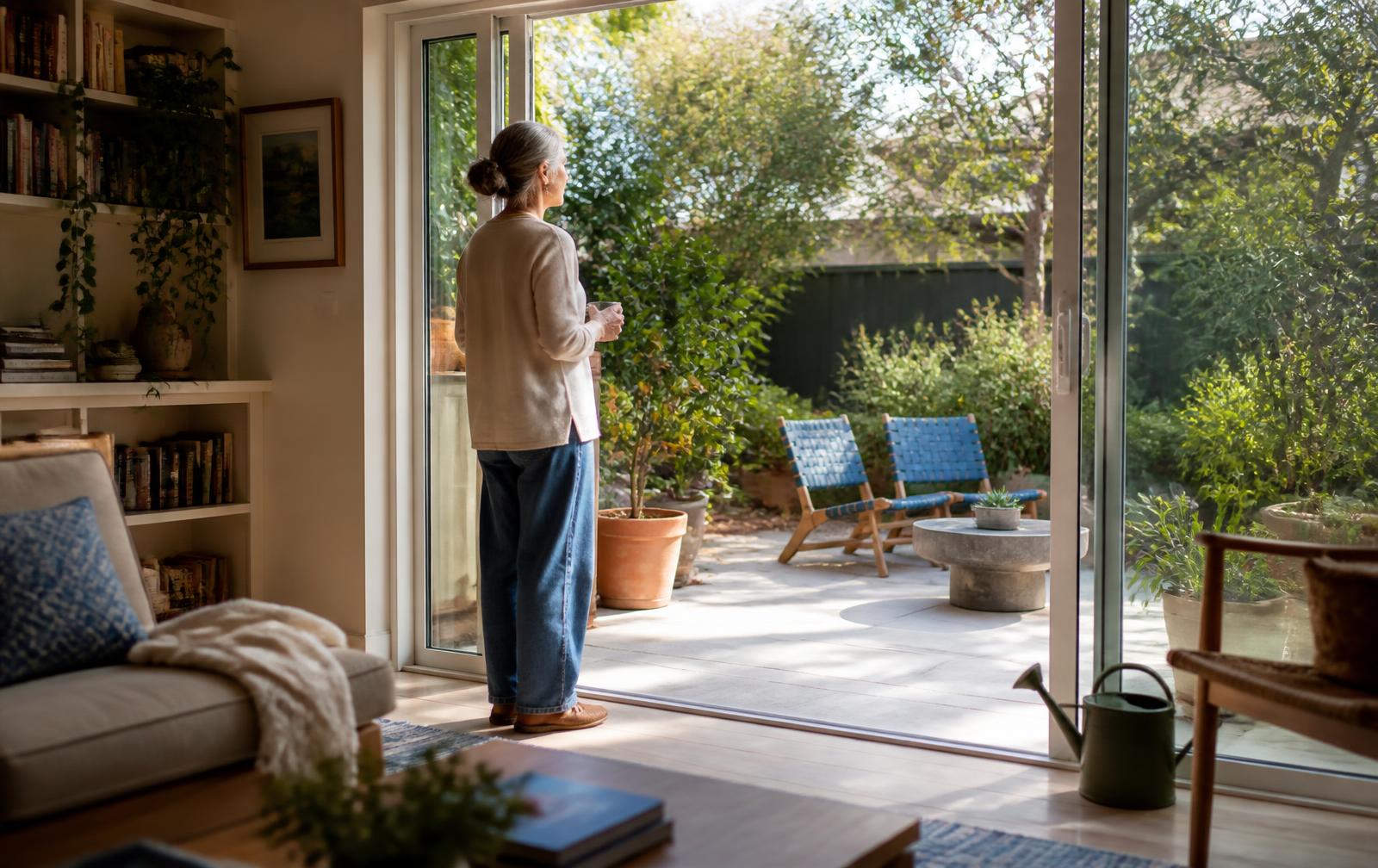
People arrive at this question from different directions, but it lands in the same place. Does this house still fit?
Not: is it a nice house. Not: is it worth something. Whether the life being lived inside it and the building around that life are still in reasonable agreement.
What "fit" actually measures
A house asks things of you. Stairs ask something. A yard asks something. Eleven windows on the weather side ask a great deal. Square footage asks in the form of cleaning, heating, repairing, and walking farther to answer the door.
Fit is the relationship between what the house asks and what you have to give it this year — not in 1994, and not in whatever year your children are picturing.
The right home is not the smallest one or the newest one. It is the one that asks of you roughly what you have to give.
Staying put, on purpose
Staying is a legitimate plan, and it is a different thing from not deciding. A real stay-put plan usually involves a few unglamorous changes: better lighting, a bathroom that has been thought about, a bedroom that could function on one floor, a handrail installed before it is needed rather than after, someone reliable for the things that used to be done from a ladder.
Plenty of my conversations end here, with stay for now, and revisit in a year. That is a good outcome. What tends to go badly is not staying — it is staying by default, with no plan and no maintenance budget, until a single bad afternoon makes the decision instead.
Rightsizing
I say rightsizing rather than downsizing because the number that matters is not the square footage, it is the fit. Sometimes that means a considerably smaller place. Sometimes it means the same size with the rooms arranged differently, or a shorter drive to the people you actually see, or trading a large lot for a small courtyard you will use every day.
The useful exercise is boring: walk your own house and mark which rooms you were in this week. Most people are living in about a third of it and maintaining all of it.
A 55+ community
These suit some people extremely well and others not at all, and the difference is usually sociability and governance. What you gain is a built-in social layer, shared maintenance and amenities, and neighbors in a comparable stage of life. What you accept is an association, rules, fees that change, and a community culture you should sample more than once before committing.
Visit on a weekday morning. Talk to somebody who has lived there four years, not the person showing you around.
Single-level living
The most underrated variable in this whole conversation. One floor, wide doorways, a curbless shower, a kitchen you can work in while seated if that day comes — these are not concessions, they are just design that anticipates a body. A well-designed single-level home is often the thing that makes staying independent for another decade unremarkable rather than heroic.
A condo, or something with less to hold
Some people want to be done with roofs. A condo, a townhome, or a lock-and-leave arrangement trades autonomy for time: no gutters, no landscaping, and someone else's phone rings when the pipe bursts. The tradeoffs are real — shared walls, association budgets, less control — and for a person who wants to travel or simply stop thinking about maintenance, they are often worth making.
Something else entirely
Moving nearer to a daughter in another county. A rental for a year while you decide, which is allowed and which almost nobody considers. Two smaller places. A duplex with family. Staying in the house and renovating the part that has stopped working. The menu is longer than the standard four options suggest.
The questions that sort it out
Where do you actually spend your days? What would you miss by Wednesday of the first week? Who is within twenty minutes, and does that matter to you? What does this house cost you annually in money, time and worry, all three? What would have to be true for you to feel safe here at eighty-five? And whose timeline are you working from — yours, or someone who loves you and is frightened?
Answer those honestly and the housing part narrows considerably. It usually turns out that people did not need more options. They needed permission to name what they wanted.
General discussion only; not legal, tax or financial advice. Every community, home and situation has its own particulars.
Published July 6, 2026. This story discusses real-estate themes in general terms and is not legal, tax or financial advice. It does not describe specific clients or transactions.
A weekly field note
One story a week, in your inbox
No listings, no market alerts. Just one thoughtful story each week.
Demo only: this form is not yet connected to a mailing service. Nothing is stored or transmitted.
Keep reading
What Homes Hold
The House Is Rarely the Whole Story
Real estate has a vocabulary for the parts of a house that can be counted, and almost none for the parts that can't. This is an attempt at the second vocabulary.
August 24, 2026Home & Life7 min read

What Homes Hold
What the Junk Drawer Knows About Us
Nobody curates a junk drawer. That is precisely why it tells the truth about a household — and why it is the hardest thing to sort.
August 17, 2026Home & Life6 min read

The Next Chapter
When the Family Home Becomes a Family Conversation
Adult children, aging parents, and three completely sincere definitions of help — a story about timing, love and the conversations families postpone.
August 10, 2026Family & Transitions8 min read